Veeraraghava Perumal Temple, Thiruvallur
Thiruvevvul (Veeksharanya)
Ssriram mt · CC BY-SA 4.0 · source
A healing shrine where devotees offer engraved metal plates of afflicted body parts; administered by the Ahobila Mutt.
Sthala Purāṇam
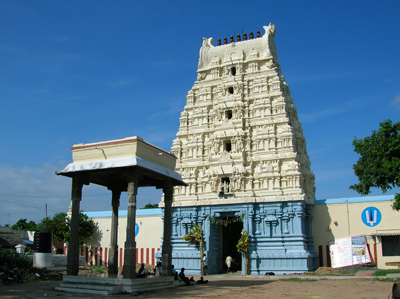
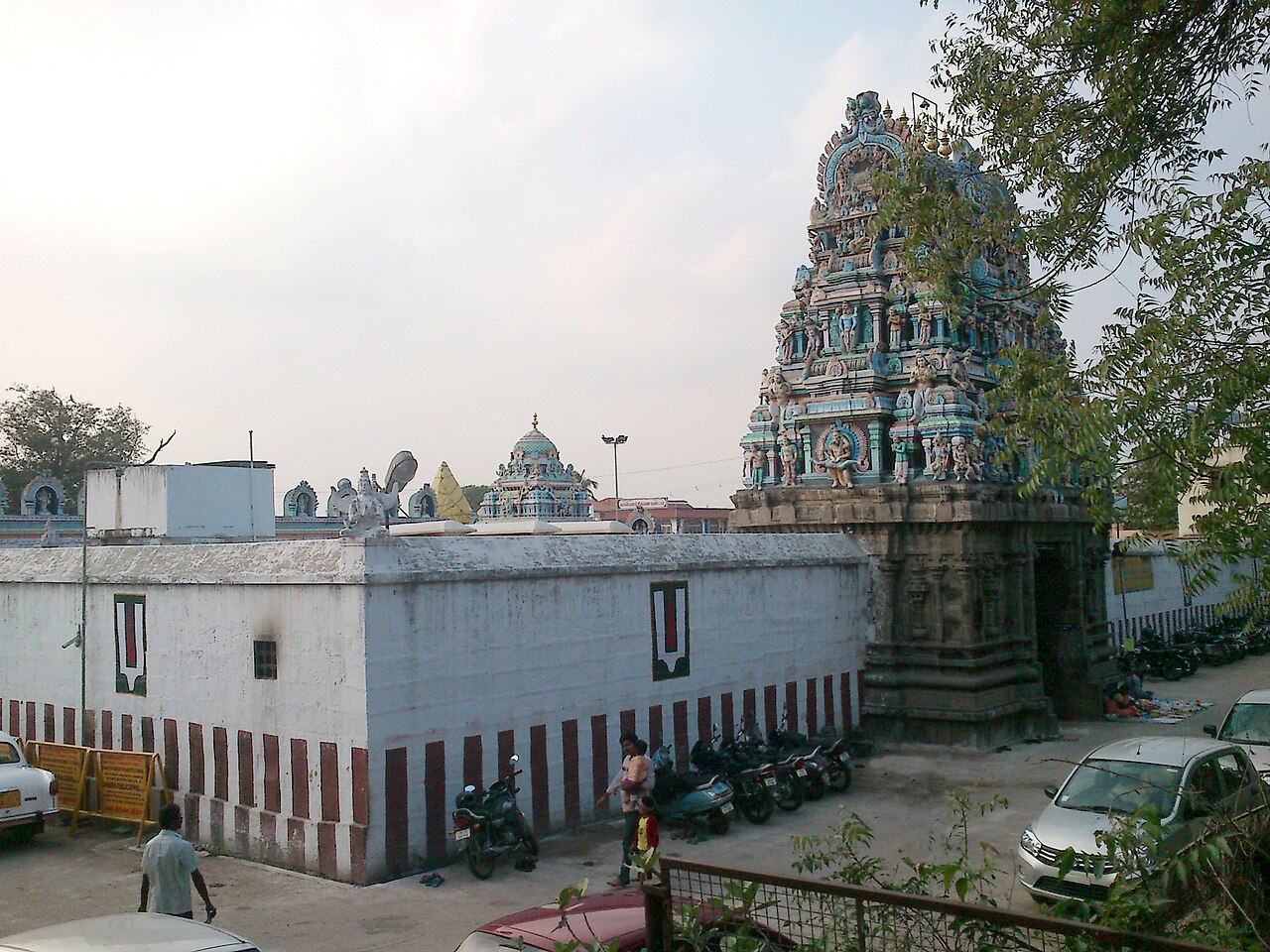
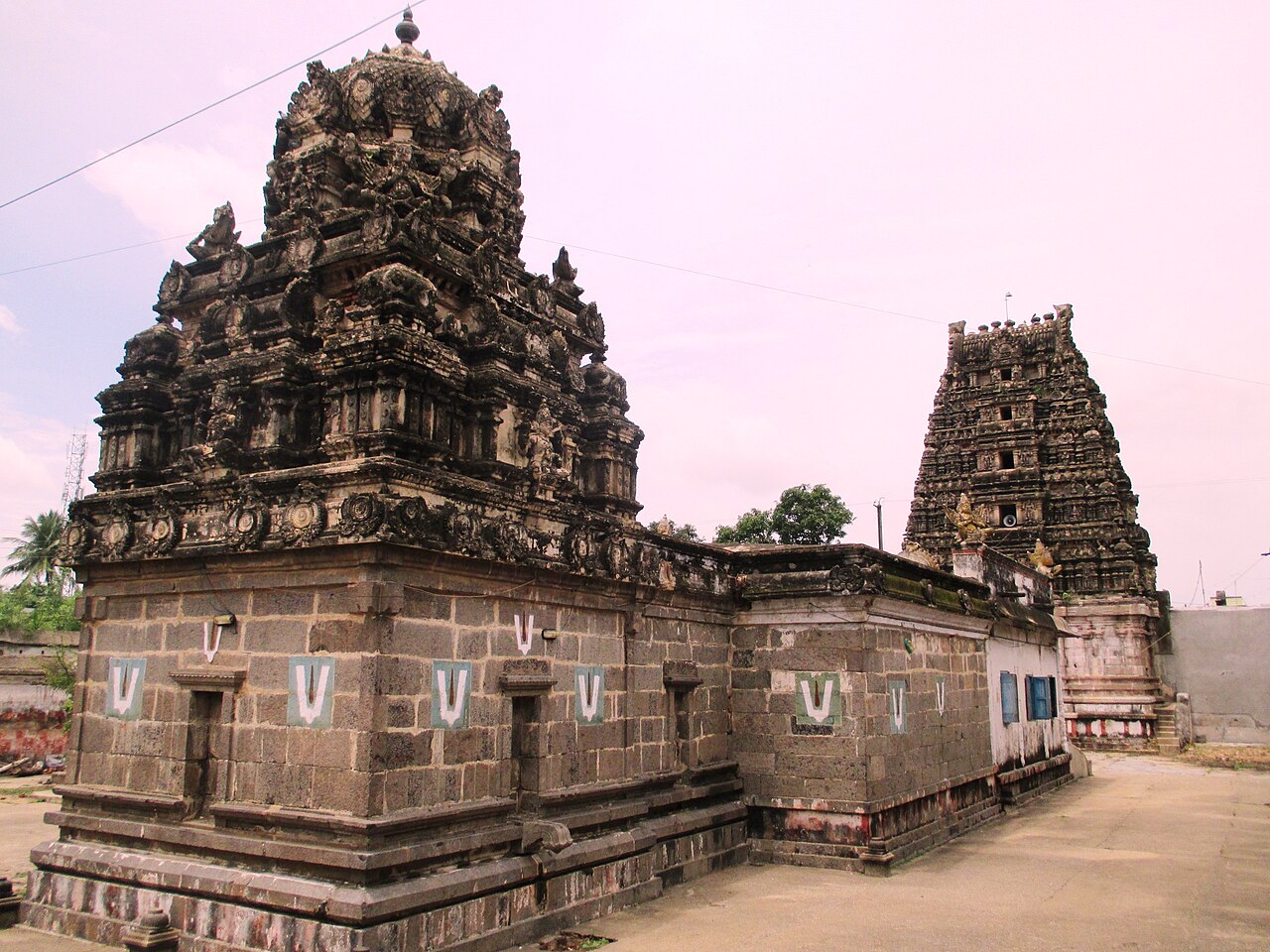
The Veeraraghava Perumal Temple at Thiruvallur, anciently called Thiruvevvul (Thiru Evvul), is a Divya Desam of the Tondai Nadu group, where Vishnu is worshipped as Veeraraghava Perumal, reclining in the Bhujanga Sayana posture upon the serpent Adishesha, with his consort as Kanakavalli Thayar (Vasumati). According to the sthala puranam, drawn from the Markandeya Purana, sage Salihotra, a devoted worshipper of Vishnu, lived here practising extreme charity, grinding rice flour and giving half to the needy while keeping the rest. When a stranger arrived seeking food, the sage offered him all his provisions; the guest then stretched himself out at that very spot and revealed himself as Vishnu, blessing the selfless devotee. The place-name arises from this episode, for the Lord is said to have asked Evvul in Tamil, meaning where to rest, and so it became Thiru Evvul Oor, which later became Thiruvallur. Because the Lord is believed to cure diseases, including fever and ailments of the body, he is venerated as Vaidya Veeraraghava Swamy, the divine physician. The temple also enshrines Lakshmi Narasimha, Hanuman, the Alvars, and Ramanuja. The sacred tank is the Hritha-Thapa-Nasini, believed to relieve mental anguish and physical illness for those who bathe in it, and the sanctum tower is the Vijayakoti Vimanam, signifying victory over demons. It was sung by Thirumangai Alvar and patronised by the Pallavas, Cholas, and Nayaks.
Mangalāśāsanam — the Āḻvār pāsurams
The Lord Veeraraghava Perumal (Vaidya Veeraraghava Swamy) with Kanakavalli (Vasumathi) Thayar of Thiruvevvul (Veeksharanya) is glorified in 12 pāsurams by:
The Veeraraghava (Vaidya Veeraraghava) Perumal temple at Tiruvallur — the Divya Desam Thiruvevvul (Veeksharanya) in Thondai Nadu — is praised in the Nalayira Divya Prabandham by Thirumangai Alvar and Thirumazhisai Alvar. The temple's traditional Mangalasasanam comprises twelve pasurams. Thirumazhisai Alvar includes Thiruvevvul among the reclining abodes of the Lord in his Naanmugan Thiruvandhadhi (verse 36), and Thirumangai Alvar glorifies the Lord here in his Periya Thirumozhi. The reclining Lord here, who acted as the messenger (dhoothan) of the Pandavas in the Krishna avatara, is revered as a healer of disease ('Vaidya Veeraraghavan').
காசை ஆடை மூடி ஓடிக் * காதல் செய்தான் * அவன் ஊர் நாசம் ஆக நம்ப வல்ல * நம்பி நம் பெருமான் ** வேயின் அன்ன தோள் மடவார் * வெண்ணெய் உண்டான் இவன் என்று * ஏச நின்ற எம் பெருமான் * எவ்வுள் கிடந்தானே
kAsai Adai mUdi Odik * kAdhal seydhAn * avan Ur nAsam Aga namba valla * nambi nam perumAn ** vEyin anna thOL madavAr * veNNey uNdAn ivan enRu * Esa ninRa em perumAn * evvuL kidandhAnE
The Lord who, complete in valour, vowed to destroy Ravana's city; the same Lord who, unable to resist the butter held by the bamboo-shouldered gopis, stole and ate it and so stood there being scolded by them. That Lord of mine reclines at Thiruvevvul.
தையலாள்மேல் காதல் செய்த * தானவன் வாள் அரக்கன் * பொய் இலாத பொன் முடிகள் * ஒன்பதோடு ஒன்றும் ** அன்று செய்த வெம் போர் தன்னில் * அங்கு ஓர் செஞ்சரத்தால் உருள * எய்த எந்தை எம் பெருமான் * எவ்வுள் கிடந்தானே
thaiyalAL mEl kAdhal seydha * thAnavan vAL arakkan * poyyilAdha pon mudigaL * onbadhOdu onRum ** anRu seydha vembOr thannil * angu Or senjaraththAl uruLa * eydha endhai emperumAn * evvuL kidandhAnE
Ravana, the sword-bearing demon who lusted after Sita (the lady); in the fierce war of that day, my Father and Lord shot a single red arrow that sent rolling Ravana's ten unfailing golden-crowned heads. That Lord of mine reclines at Thiruvevvul.
முன் ஓர் தூது * வானரத்தின் வாயில் மொழிந்து * அரக்கன் மன் ஊர் தன்னை * வாளியினால் மாள முனிந்து ** அவனே பின் ஓர் தூது * ஆதி மன்னர்க்கு ஆகி பெருநிலத்தார் * இன்னார் தூதன் என நின்றான் * எவ்வுள் கிடந்தானே
munnOr thUdhu * vAnaraththin vAyil mozhindhu * arakkan mannUr thannai * vALiyinAl mALa munindhu ** avanE pinnOr thUdhu * Adhi mannarkkAgi peruNilaththAr * innAr thUdhan ena ninRAn * evvuL kidandhAnE
He who, in the Rama-avatara, first sent a message through the mouth of the monkey (Hanuman) and in wrath destroyed the demon-king's city with His arrows; and who, in the Krishna-avatara, then went Himself as the messenger of the foremost (Pandava) kings, so that the people of this vast earth knew Him as 'the messenger of so-and-so' - that very Lord reclines at Thiruvevvul.
nAgaththaNaik kudandhai vehkAth thiruvevvuL / nAgaththaNai arangam pEranbil nAgath / thaNaip pARkadal kidakkum Adhi nedumAl / aNaippAr karuththan AvAn
Thirumazhisai Alvar declares that the primordial, boundless Lord (Adi Nedumaal) reclines upon the serpent-couch (Adisesha) at Thirukkudandhai, Thiruvekka, Thiruvevvul (Tiruvallur), Thiruvarangam, Thirupper (Koviladi), Thiruvanbil, and the Milk-Ocean (Thirupparkadal), in order to enter and dwell in the hearts of those devotees who long to embrace Him. (This verse simultaneously sanctifies Thiruvevvul and Thiru Vekka.)
More verses & references (1)
- Thirumangai Alvar performs Mangalasasanam to the reclining Lord of Thiruvevvul, recalling that the Lord who served as the Pandavas' envoy in the Krishna avatara now graciously reclines at Tiruvallur for his devotees. Exact decade/verse reference not confidently sourced. — Thirumangai Alvar, Periya Thirumozhi · source ↗
Tamil text & meaning sourced from divyaprabandham.koyil.org and other Śrī Vaiṣṇava authorities — please cross-check the linked source for the canonical reading.
Read the pāsurams ↗Gallery


Tap an image to view it larger — use ‹ › to browse, ✕ to close. Images via Wikimedia Commons.
Plan your visit
📍 13.12310, 79.91200
Routes, distances, hotels and restaurants open in Google Maps with live data. Build a phased pilgrimage plan →