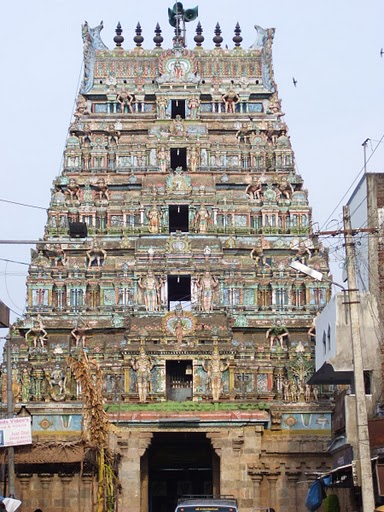
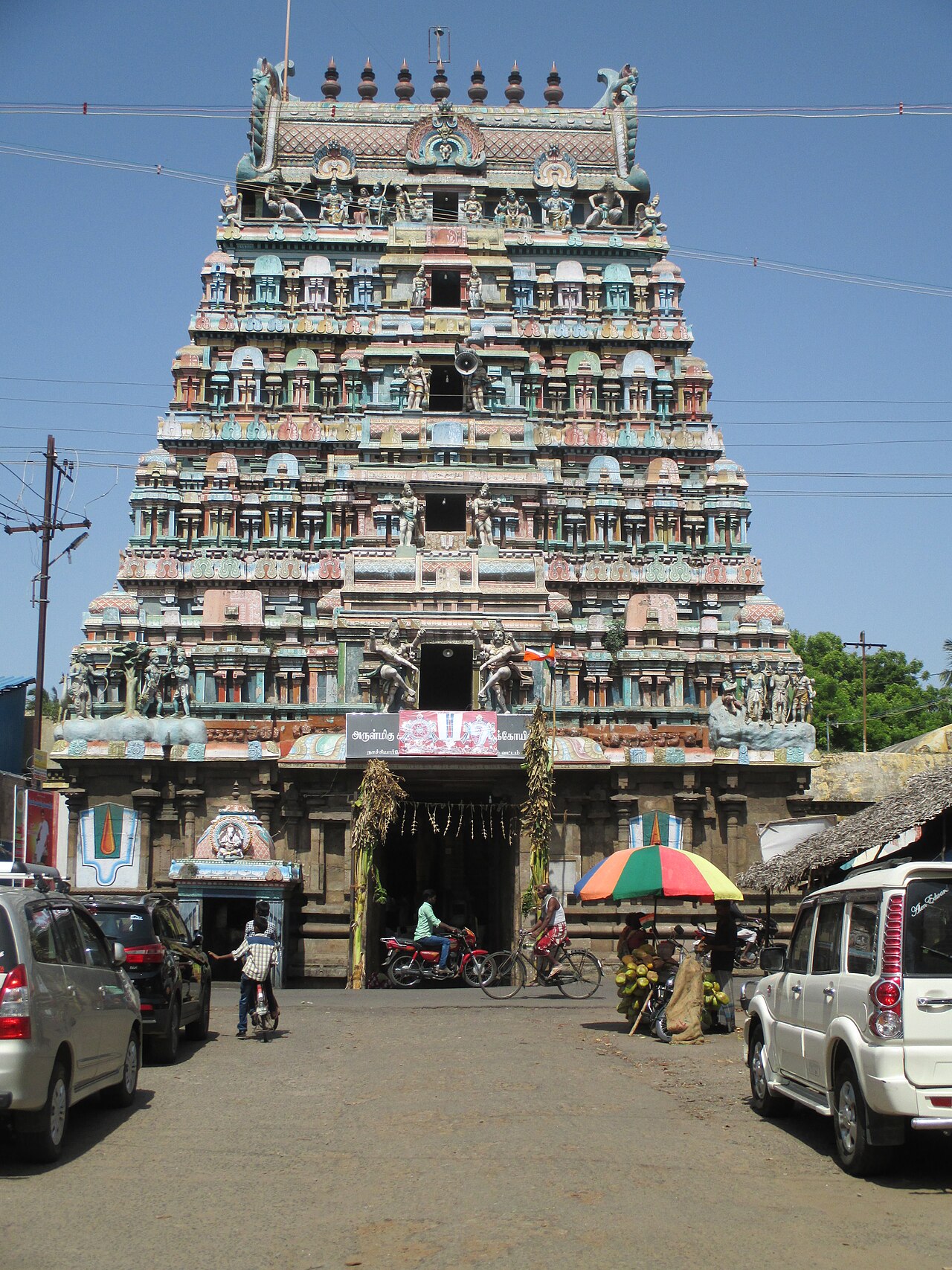
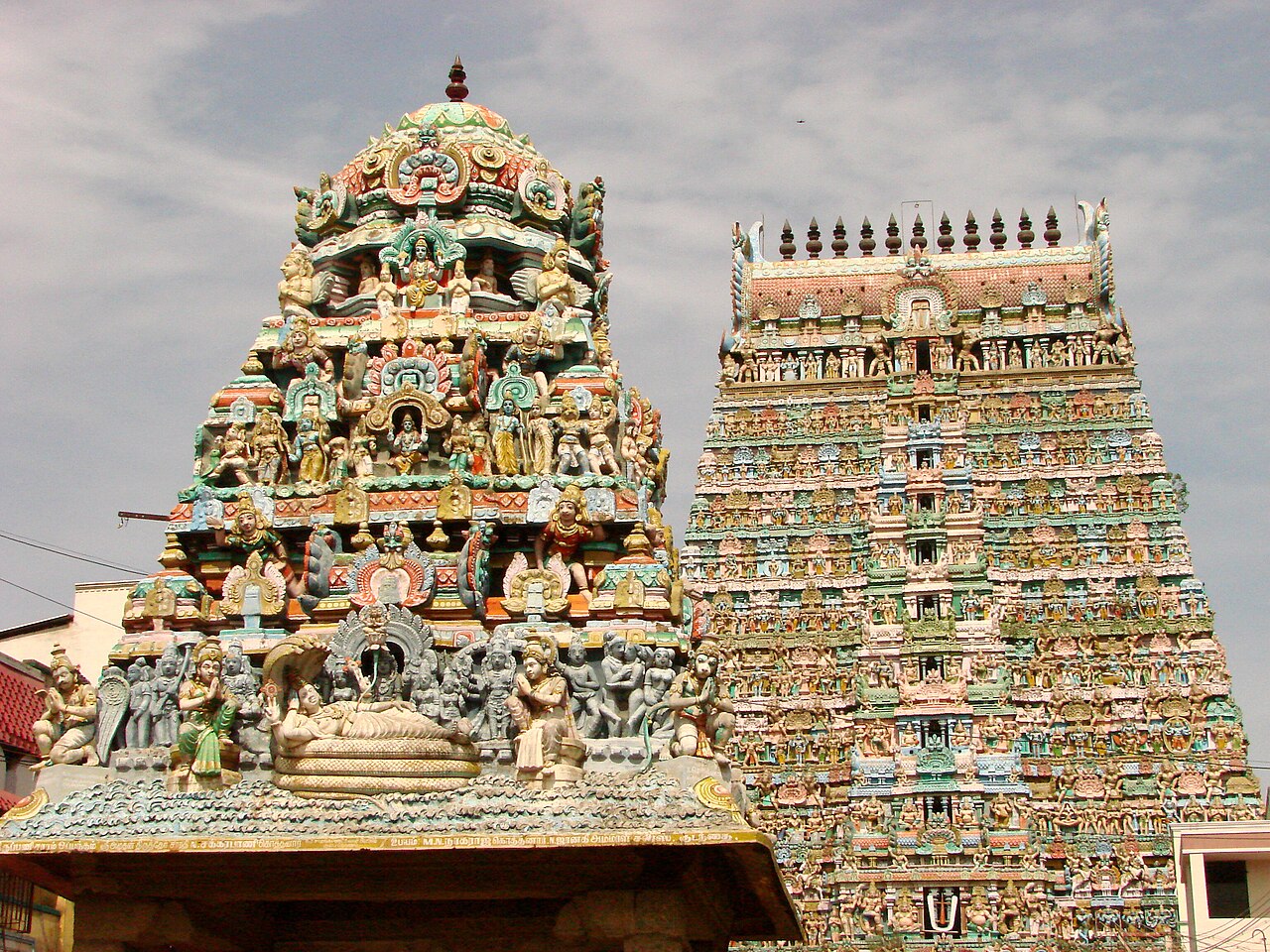
Jaganatha Perumal Temple (Nathan Koil), Thirunandhipura Vinnagaram
Thirunandhipura Vinnagaram
Richard Mortel from Riyadh, Saudi Arabia · CC BY 2.0 · source
Sthala Purāṇam
The Jaganatha Perumal Temple at Nathan Koil, near Kumbakonam, is the twenty-first of the hundred and eight Divya Desams, where Vishnu is worshipped as Jaganatha, also called Nathanathan, with his consort as Shenbagavalli Thayar. The principal sthala puranam centres on Nandi, the sacred bull of Shiva. Nandi once failed to show proper reverence to Vishnu's dwarapalakas, the divine gatekeepers, and was cursed so that his body burned with oppressive heat. Distressed, he sought counsel from Shiva, who directed him to Shenbagaranyam, the forest of shenbaga (champak) trees that is the present temple site, where Lakshmi herself was performing penance to be received into Vishnu's chest. Pleased by Nandi's austerities, Lord Narayana appeared, relieved him of the curse, and simultaneously welcomed Lakshmi into his heart. Because Nandi attained grace here, the place is named Nandipuram and the temple Nandhipura Vinnagaram, vinnagaram meaning heavenly temple; the sacred tank is called Nandi Theertham, with another water body named Nandi Pushkarini. A secondary legend recalls Emperor Sibi, who offered his own flesh to save a pigeon from a pursuing eagle; witnessing this selflessness, Vishnu blessed him and is held to face west to honour the deed. The temple vimana is the Mandara Vimanam. Thirumangai Alvar sang eleven pasurams glorifying this shrine in the Nalayira Divya Prabandham.
Mangalāśāsanam — the Āḻvār pāsurams
The Lord Jaganatha Perumal (Vinnagara Perumal) with Shenbagavalli of Thirunandhipura Vinnagaram is glorified by:
Thirunandhipura Vinnagaram, the Jaganatha Perumal temple at Nathan Koil near Kumbakonam, takes its name from Nandi (Shiva's bull) who did penance here and was relieved of a curse by Vishnu; the Lord is enshrined seated, bearing sword, bow, discus, conch and staff, under the Mandhaara Vimanam facing west. Its Mangalasasanam is by Thirumangai Alvar alone, who praised the shrine in his Periya Thirumozhi (commonly cited as ten or eleven hymns).
தந்தை மனமுந்து துயர் நந்த இருள் வந்த விறல் நந்தன் மதலை* எந்தை இவன் என்று அமரர் கந்த மலர் கொண்டு தொழ* நின்ற நகர்தான்* மந்த முழவோசை மழையாக எழு கார்* மயில்கள் ஆடு பொழில் சூழ்* நந்தி பணி செய்த நகர்* நந்திபுர விண்ணகரம் நண்ணு மனமே
thandhai manamundhu thuyar nandha iruL vandha viRal nandhan madhalai* endhai ivan enRu amarar kandha malar koNdu thozha* ninRa nagar thAn* mandha muzhavOsai mazhaiyAga ezhu kAr* mayilgaL Adu pozhil sUzh* nandhi paNi seydha nagar* nandhipura viNNagaram naNNu manamE
O mind, reach Nandhipura Vinnagaram! This is the town where the Lord stands as Krishna, the son of Nandagopa, who removed the deep sorrow that tormented the heart of his father (Nandagopa, and Vasudeva) and dispelled the darkness; here the immortal devas worship him as 'this is our Lord, our father' with fragrant flowers. It is the town surrounded by groves where peacocks, mistaking the soft sound of the festive drums for the rumble of rain-clouds, rise up and dance. It is the very town that Nandi (the bull of Shiva) served in worship.
பிறையினொளி யெயிறிலக முறுகியெதிர் பொருதுமென* வந்த அசுரர்* இறைகளவை நெறுநெறென வெறியவவர் வயிறழல* நின்ற பெருமான்* சிறைகொள்மயில் குயில்பயில மலர்களுக அளிமுரல* அடிகொள் நெடுமா* நறைசெய்பொழில் மழைதவழும்* நந்திபுர விண்ணகரம் நண்ணு மனமே
piRaiyin oLi yeyiRu ilaga muRugi edhir porudhum ena vandha asurar iRai kaLavai neRuneRu ena veRiya avar vayiRu azhal ninRa perumAn siRai koL mayil kuyil payila malargaL uga aLi mural adi koL nedumA naRai sey pozhil mazhai thavazhum nandhipura viNNagaram naNNu manamE
O mind, reach Nandhipura Vinnagaram! Here dwells the great Lord (as Narasimha) who, when the demon came raging to fight him, his fangs gleaming like the crescent moon, stood and crushed that demon's limbs to powder with a crunching sound, his belly aflame. It is the town with tall mango groves where caged-plumed peacocks and cuckoos throng, where flowers shed and bees hum, the honey-rich groves over which the rain-clouds glide.
நறைசெய் பொழில் மழைதவழும் நந்திபுர விண்ணகரம் நண்ணி உறையும் உறைகொள் புகர் ஆழி சுரிசங்கம் அவை அங்கை உடையானை ஒளிசேர் கறைவளரும் வேல்வல்ல கலியன் ஒலிமாலை இவை ஐந்தும் ஐந்தும் முறையில் இவை பயில வல்ல அடியவர்கள் கொடுவினைகள் முழுது அகலுமே
naRaisey pozhil mazhaithavazhum nandhipura viNNagaram naNNi uRaiyum uRaikoL pugar Azhi surisangam avai angai udaiyAnai oLisEr kaRaivaLarum vElvalla kaliyan olimAlai ivai aindhum aindhum muRaiyil ivai payila valla adiyavargaL koduvinaigaL muzhudhu agalumE
These ten garland-like verses of melodious words were composed by Kaliyan (Thirumangai Alvar), master of the bright, blood-stained spear, upon the Lord who bears in his beautiful hands the lustrous discus and the coiled conch, and who dwells fittingly in Nandhipura Vinnagaram of honey-laden groves over which the rain-clouds glide. The devotees who can recite these ten verses in proper order will have all their cruel sins (karmas) wholly removed.
More verses & references (1)
- Thirumangai Alvar sings the Mangalasasanam of Jaganatha Perumal (Natha Nathan / Vinnagara Perumal) of Thirunandhipura Vinnagaram (Nathan Koil) near Kumbakonam — the Lord seated under the Mandhaara Vimanam who relieved Nandi (Shiva's bull) of the curse of oppressive heat after his penance in the Shenbaranya forest. Authorities record about ten to eleven hymns by the Alvar in his Periya Thirumozhi. Exact Tamil verse text and decade reference were not confidently sourced and are left blank. — Thirumangai Alvar, Periya Thirumozhi · source ↗
Tamil text & meaning sourced from divyaprabandham.koyil.org and other Śrī Vaiṣṇava authorities — please cross-check the linked source for the canonical reading.
Read the pāsurams ↗Gallery


Tap an image to view it larger — use ‹ › to browse, ✕ to close. Images via Wikimedia Commons.
Plan your visit
📍 10.94300, 79.44000
Routes, distances, hotels and restaurants open in Google Maps with live data. Build a phased pilgrimage plan →